 ultimate-guide
Hiring Professional Security for Retail Chains Guide
Quick Summary
Hiring professional security for retail chains means building one consistent system that protects inventory, staff and customers at every location. The case rests on three things: losses you cannot see clearly, incidents you cannot document well, and coverage gaps between stores that nobody owns. A professional program brings the same standards and reporting to each site.
- Shrinkage often comes from internal theft, vendor fraud and process failures, not only shoplifting.
- A trained guard with incident logs turns missing inventory into a documented, answerable sequence of events.
- Coverage should start with a separate risk assessment for each store, not one template for all sites.
- Armed security needs a written threat assessment and confirmation with your insurer and counsel first.
- Compare provider quotes on training, background checks, employment model, reporting and shift-filling speed, not just hourly rate.
Table of Contents
Why Retail Chains Need Professional Security Now
Most retail chains treat security as a line item to minimize rather than a function to get right. That instinct costs money. Hiring professional security for retail chains is less about buying presence and more about building a system that protects inventory, staff and customers across every location, and doing it consistently. The case for a professional program usually comes down to three things: losses you can't see clearly, incidents you can't document well, and coverage gaps between stores that nobody owns.
Shrinkage is the first thing a chain notices, and it is rarely just shoplifting. Internal theft, vendor fraud and process failures all show up as the same missing inventory. A trained guard working a defined post, backed by incident logs, changes the question from "did something go missing?" to "what happened, when, and who was responsible?" That distinction matters when you need to make decisions about staffing, cameras and policies.
Consistency is the second reason. A store manager covering security between other duties tends to respond differently on a Tuesday afternoon than on a Saturday night. A professional provider brings the same standards, the same reporting format and the same escalation path to every location, which is what a multi-site operator needs to see clearly.
Liability is the third. When something goes wrong on a sales floor or in a parking lot, the question of what was in place beforehand gets asked quickly. Documented procedures, licensed and background-checked officers, and written incident reports give your legal and insurance teams something concrete to work with. Improvised coverage rarely does.
Retail Loss Prevention Strategies That Work With Guards
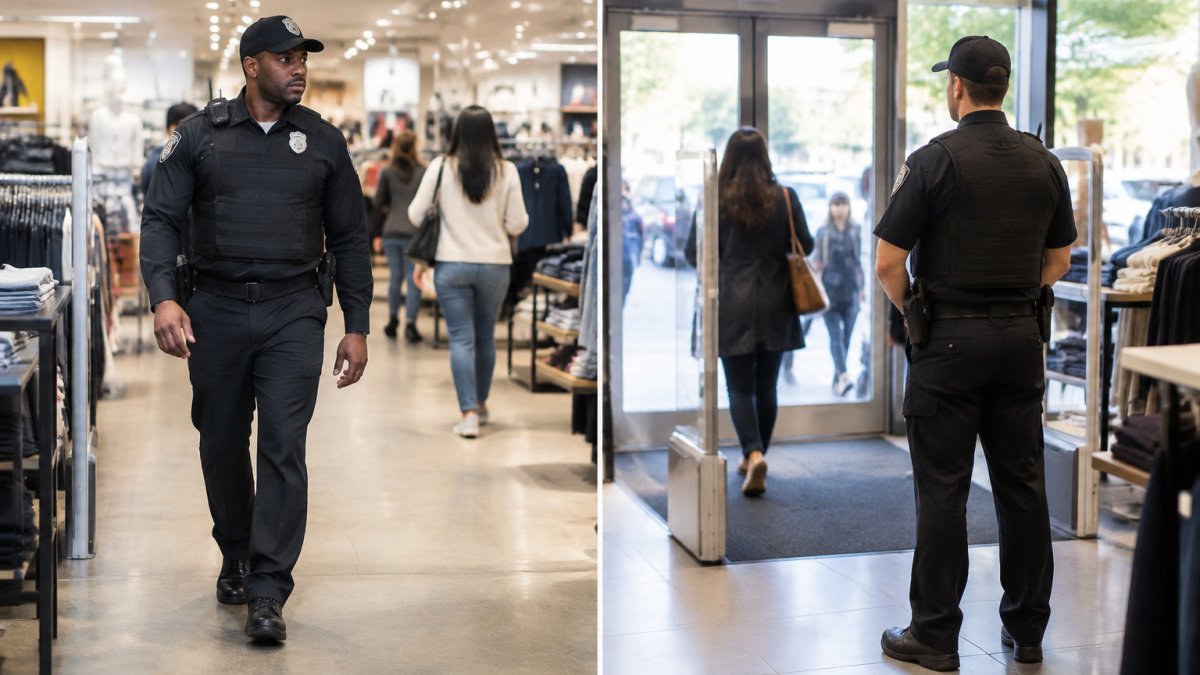
A guard is one part of loss prevention, and works best when the rest of the program is designed around that role. The strategies that tend to produce results pair visible presence with clear procedures. Guards are most effective when posted at high-risk points such as entrances and high-value merchandise areas, with a clear, written set of responsibilities.
Retail loss prevention strategies that include guards also depend on communication. Incident logs with time, location, description and any action taken, reviewed regularly with store management, help reveal patterns over time. Patterns in that data, such as a recurring problem during a particular shift or at a particular exit, are where the real savings come from.
Planning Retail Security Coverage Across Your Locations
Coverage planning for a chain starts with a risk assessment at each store, not a single template applied everywhere. A flagship location with high foot traffic and expensive electronics needs a different level of coverage than a small suburban store with low theft history. Map each site's exposure, then decide where a guard adds value, where cameras and access control are enough, and where a patrol or periodic visit is the right answer.
Build a single coverage plan that all sites follow, with local adjustments documented. For a deeper walkthrough, see custom security plans for commercial buildings. Reporting should roll up to one point of contact so that you can compare performance across locations and spot a store that is underperforming before it becomes a loss.
Armed vs Unarmed Security for Retail: Choosing the Right Model
Armed security is a different decision with different legal, insurance and training implications, and it is rarely the default for general retail. Make the choice based on a written threat assessment and confirm the requirements with your insurer and counsel before deciding.
What Retail Security Guards Cost and What Drives the Price
Pricing for retail security depends on several variables, including the number of posts, hours of coverage, whether officers are armed, the level of training and reporting required, and the geographic market. Pricing depends on the number of posts, hours of coverage, whether officers are armed, and the level of training and reporting required. For current pricing, request a site-specific quote from Securify Security Services through its website.
Pricing Factors to Compare in Provider Quotes
When you compare proposals, look past the hourly rate. For a checklist on vetting security guard companies before you commit, review this guide. Check what training is included, how background checks are handled, whether officers are employed directly or subcontracted, how incidents are reported and how quickly the provider can fill a vacant shift. Two quotes with the same headline rate can differ substantially in what you actually receive. Reporting is one of the most important differences, and this article covers what to look for in security reporting.
Building a Security Guard Service Contract Template That Protects You
A service contract should define the scope of work, the hours and posts covered, reporting requirements, response times, training and licensing standards, insurance and liability terms, and the process for replacing an officer or ending the agreement. Include a clause requiring the provider to maintain current licenses and general liability coverage, and specify how incidents are documented and shared with you. Have counsel review the final version before you sign.
Requesting a Quote From Securify Security Services
To get an accurate proposal, prepare the details of each location: square footage, operating hours, known risk points, and any specific concerns such as after-hours access or high-value inventory. If you are considering patrol coverage, read what an apartment mobile patrol service should include before you request a quote. Customizable security plans can be built around that information to fit your chain. Contact the team through the website to request a free quote and start the conversation about coverage across your locations.
Frequently Asked Questions
How many security guards does a retail chain need?
The right number depends on store size, square footage, operating hours, past shrinkage and incident history, and whether you need fixed posts or roving patrols. Most chains start by mapping high-risk periods and entry points, then assigning posts to match. Pricing and staffing levels vary by location and schedule, so request a written quote from Securify Security Services through its website to get figures based on your actual footprint.
What is the difference between retail security and asset protection?
Retail security focuses on the visible presence of guards, patrols and access control that deter incidents and respond to emergencies. Asset protection is broader and includes loss prevention programs, inventory controls, incident investigation and reporting that reduce shrink over time. Many retail chains use guards as one component of an asset protection plan rather than treating them as a standalone solution.
Do armed security guards make sense for retail stores?
Armed officers can be appropriate for stores in high-crime areas, locations that handle large cash volumes, or sites with a documented history of violent incidents. For many stores, unarmed officers with strong de-escalation training and clear incident reporting provide adequate protection at lower liability exposure. Armed coverage carries different legal and insurance implications, and these requirements should be confirmed with counsel and your insurer before deployment.
What should a retail security service contract include?
A solid contract defines the scope of services, post locations, hours, officer qualifications, training standards, incident reporting timelines, insurance and indemnification clauses, and termination terms. It should also specify how performance is measured and how often reviews occur. Ask your provider to confirm licensing and to supply certificates of insurance, and have legal counsel review liability language before signing.
How does professional security reduce retail shrinkage?
Trained guards deter theft through visible presence, observe suspicious behavior and document incidents that feed into loss prevention analysis. Consistent reporting helps you identify patterns by location, shift and time of day, which lets you adjust coverage where losses concentrate. Results depend on how well the security program is integrated with inventory controls and store operations, so measure shrink before and after deployment.