 ultimate-guide
Construction Site Theft Prevention: 7 Best Practices
Table of Contents
- Why Construction Site Theft Is Getting Worse in 2026
- Start With a Construction Site Security Checklist
- Construction Equipment Theft Prevention: What Actually Works
- Job Site Security Cameras: Placement, Coverage, and Monitoring
- When to Hire Construction Site Security Guards
- Theft Prevention Budgets, Costs, and Return on Investment
- Incident Response and Recovery Playbook for Construction Site Theft
- Frequently Asked Questions
Last Updated: October 16, 2026
Why Construction Site Theft Is Getting Worse in 2026
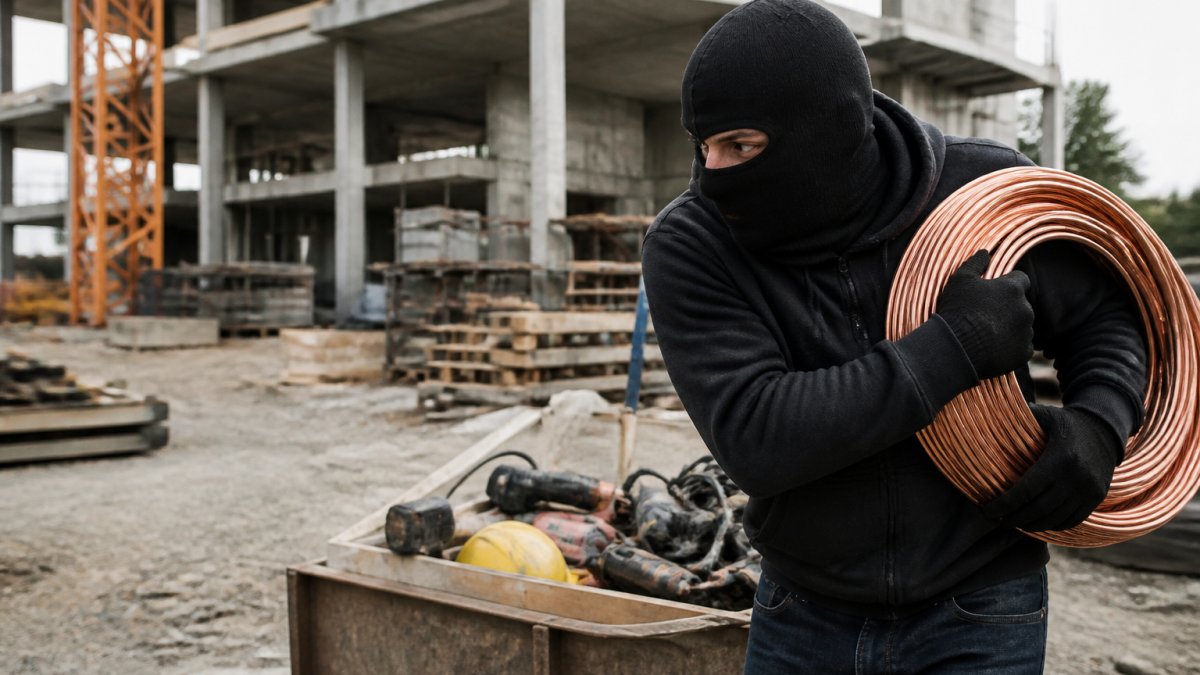
Construction site theft has become a persistent, expensive problem for project managers across the country, and the best practices for construction site theft prevention have shifted accordingly.
The core issue is that most sites treat security as a single measure rather than a layered system. A locked gate stops an opportunist.
Below, we break down seven practices that actually reduce losses, organized by project phase, equipment type, and budget reality.
Start With a Construction Site Security Checklist
A construction site security checklist is a phased, written plan that assigns specific countermeasures to each stage of the project, from mobilization through demobilization. The most common mistake is writing one plan and using it for the entire build. Risk changes as the site changes.
Phase 1: Site Setup and Mobilization
During setup, the site is most exposed because fencing, lighting, and storage are not yet in place. Prioritize perimeter security first: install chain-link fence around the full site boundary, add barbed wire or anti-climb topping on high-risk sides, and set up a single controlled access point with a visitor log. Get security lighting and a locked storage container operational before bringing high-value tools on site.
Phase 2: Active Construction and Peak Risk
Peak construction is peak theft risk. Materials, machinery, and portable equipment are all present at once, and dozens of workers, subcontractors, and deliveries move through daily. Tighten access control, verify every delivery against a schedule, and make sure end-of-shift checks are actually completed rather than signed off on autopilot.
Phase 3: Closeout and Demobilization
Closeout is the most overlooked phase. As crews leave, attention drops, but expensive equipment and leftover materials are still on site. Keep lighting and surveillance running until the last asset leaves, and stagger equipment removal so you are never storing everything in one unmonitored location.
| Phase | Primary Risk | Priority Countermeasure |
|---|---|---|
| Setup | No perimeter yet | Fencing, lighting, storage |
| Active build | High traffic, high value | Access control, checks |
| Closeout | Falling attention | Surveillance, staged removal |
Construction Equipment Theft Prevention: What Actually Works
Construction equipment theft prevention comes down to three things: making equipment hard to move, hard to sell, and easy to trace. Thieves want fast, quiet, low-risk jobs.
Start with identification. Record serial numbers, photograph every piece of machinery, and mark tools with a unique identifier. If equipment is stolen, that record is what makes a police report and an insurance claim usable.
Job Site Security Cameras: Placement, Coverage, and Monitoring
Job site security cameras work best as a deterrent and a documentation tool, not as a standalone solution. Placement matters more than camera count.
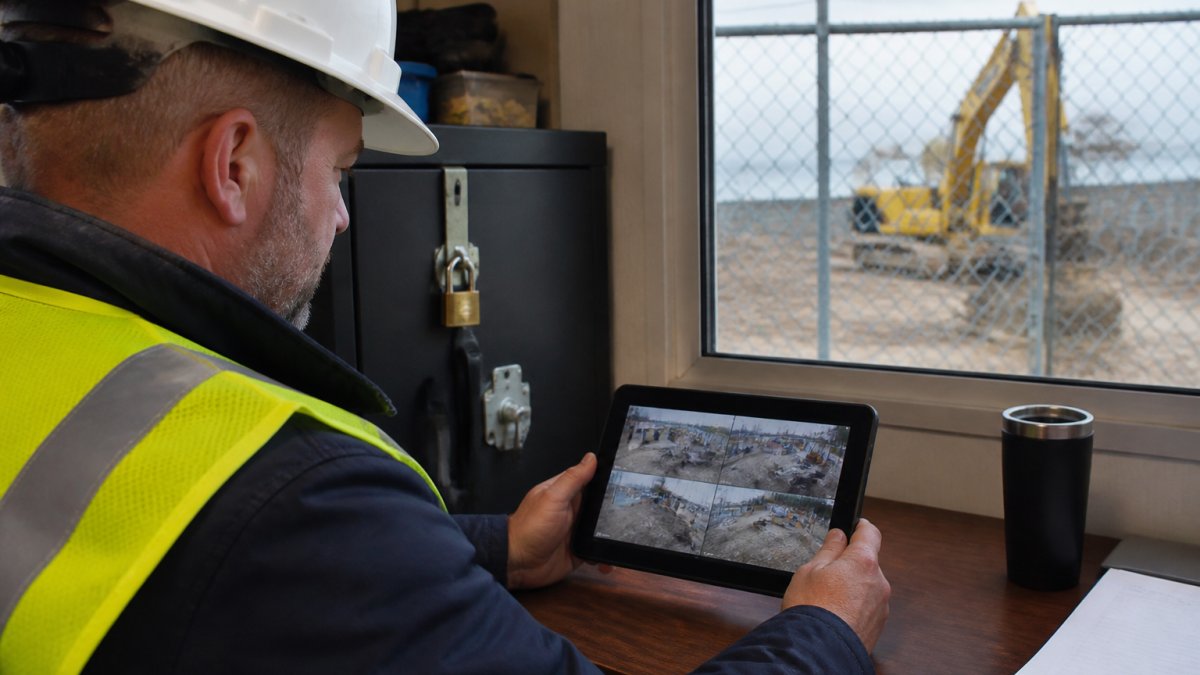
Modern systems add motion detection and remote video monitoring, so someone is watching alerts rather than footage reviewed after the fact. Cameras also produce the timestamped evidence that supports incident reporting and insurance claims.
When to Hire Construction Site Security Guards
Construction site security guards make sense when the value at risk justifies a continuous human presence. Cameras record a theft; a guard can prevent one. Sites with high-value machinery, repeated incidents, or a hard-to-secure perimeter benefit most.
For round-the-clock coverage, a mix of on-site officers and vehicle patrols usually works better than static posts alone, because patrols cover more ground and create unpredictable timing. When you evaluate providers, ask how they handle overnight alertness, reporting, and incident documentation.
Theft Prevention Budgets, Costs, and Return on Investment
Most security budgets fail for one of two reasons: they are set as a flat percentage of project cost with no reference to what is actually on site, or they are assembled reactively after the first loss. A risk-based budget fixes both problems by tying every dollar to a specific asset and a specific threat.
Build the budget from the asset register, not the project value
Start with a simple asset register: every piece of machinery, every tool over a set replacement threshold, every material stockpile that sits overnight.
Rank assets by that combined exposure. The top 20% of the register usually drives 80% of the loss exposure, and that is where the first security dollars should go.
Where the money typically goes
Security spending on a commercial site generally falls into five buckets, and each has a different cost driver:
- Perimeter and fencing, priced by linear feet, height, and whether anti-climb topping or sensor cabling is added. Temporary chain-link panels are the cheapest layer; sensor-equipped or reinforced fencing costs materially more per foot.
- Lighting, priced by fixture count, pole height, and whether the site has grid power or needs generator/solar units. Coverage area per fixture is the number that matters, not fixture count.
- Cameras and monitoring, the hardware is the smaller cost. The recurring cost is the monitoring subscription, storage retention period, and cellular data if the site has no hardwired internet. A camera system with no one watching alerts is a documentation tool, not a deterrent.
Compare spend against the deductible, not just the loss
A useful sanity check: if your insurance deductible is high and your premium is already loaded for theft claims, the marginal dollar spent on prevention is often cheaper than the marginal dollar spent on insurance. Ask your broker how a documented prevention program affects your premium and your claim history. Many carriers reward sites that can show a written plan, an asset register, and completed end-of-shift checks.
A simple prioritization rule
When the budget is tight, and it usually is, spend in this order:
- Identification and registration (lowest cost, highest claim value)
- Perimeter and lighting at the single access point
- Secure storage for the highest-value portable tools
- Cameras with active monitoring at storage and staging areas
- Guards or patrols for the residual risk the layers above cannot cover
For current pricing on guard and patrol coverage, request a quote rather than budgeting from an industry average, rates vary too much by market, coverage window, and post type to be useful as a planning number.
Incident Response and Recovery Playbook for Construction Site Theft
A written incident response plan turns a chaotic morning into a controlled process. The first hour after a theft is discovered determines how much is recovered, how smoothly the claim is paid, and whether the same gap gets exploited again. Assign roles in advance, a site lead, a documentation lead, and a company contact for the insurer, so no one is improvising at 6 a.m.
Step 1: Secure the scene and preserve evidence
Do not let the crew walk the site and pick things up. Treat the point of entry, the storage container, and any disturbed ground as a scene. Photograph everything before anything is moved: the cut fence, the broken lock, tire tracks, footprints, dropped tools. Note the time the theft was discovered and the time of the last known-good check.
Step 2: Notify law enforcement and file the report
Call the non-emergency line for a completed theft, or emergency if a crime is in progress or someone is on site. File the report the same day. The report number is the document your insurer will ask for first, and it is also what links your loss to any recovered property later.
Step 3: Preserve and export surveillance footage
Export the relevant footage to a separate drive the same day. Do not rely on the system to keep it. Capture the access point, the storage area, and any perimeter camera with a view of the entry. If you use a monitored system, ask the monitoring provider to flag and retain the alert window.
Step 4: Document the loss
Build a loss schedule from the asset register: item, serial number, purchase or rental cost, date acquired, and current replacement cost. Include rental-equivalent downtime where the asset was on a schedule. Attach photos and the police report number. This schedule is what you submit to the insurer, and it is also what you use to update your risk ranking for the rest of the project.
Step 5: Notify your insurer and your broker
Report the loss within the window your policy requires, most commercial policies set a notice period, and late notice is one of the most common reasons a claim is disputed. Ask your broker whether the loss affects your premium at renewal and whether a documented prevention program can offset it.
Step 6: Close the gap and get back to work
Before the site reopens for the next shift, change something. If the entry point was the vulnerability, add lighting or a sensor there. If the storage container was the target, add an alarm or move the highest-value tools inside the trailer overnight. If the same site gets hit twice the same way, the plan was never updated after the first incident.
A short post-incident review
Within a week, sit down with the site lead and walk through four questions: How did they get in? What did they take, and why was it accessible? How long were they on site before anyone noticed? What single change would have stopped or slowed them? Write the answers down and assign an owner and a date to each fix.
Frequently Asked Questions
What are some ways to prevent theft on construction sites?
Layer your defenses. Start with perimeter security: chain-link fencing, controlled access points, and security lighting. Add job site security cameras with motion detection and remote monitoring. Secure tools and materials in locked storage containers or tool cages. Track high-value equipment with GPS and immobilizers, and keep a serial-number inventory. For high-risk sites or after-hours coverage, construction site security guards provide a visible deterrent and rapid response. Review your construction site security checklist at every project phase.
How can surveillance cameras help prevent construction site theft?
Job site security cameras deter thieves before they strike and give you evidence if they do. Place cameras at gates, material storage areas, fuel tanks, and equipment parking zones. Use motion-activated recording and remote viewing so you can check the site from anywhere. Cameras also help with insurance claims by documenting the incident. Pair cameras with signage warning that the site is monitored; visible deterrence often stops theft before it happens.
What should a construction site theft prevention plan include?
A complete plan covers risk assessment by project phase, a construction site security checklist, access control for authorized personnel and visitors, perimeter security (fencing, lighting, gates), surveillance, equipment identification and GPS tracking, secure storage, and an incident response playbook. Include roles and responsibilities, a communication tree, and a process for reporting to law enforcement and insurance. Review and update the plan as the site evolves.
Do I need construction site security guards for my project?
It depends on risk. High-value equipment, remote locations, past theft incidents, or projects in high-crime areas often justify guards. Construction site security guards provide 24/7 presence, patrol the perimeter, monitor access points, and respond to alarms. They also handle visitor logs and end-of-shift checks. For smaller sites, a combination of cameras, lighting, and GPS tracking may suffice. A security provider can help you decide based on a site assessment.
What should you do after a theft at a construction site?
First, ensure no one is in danger and secure the site. Call law enforcement and file a report; get the report number. Document everything: photos, serial numbers, GPS data, and witness statements. Notify your insurance company promptly and provide the police report and inventory. Review camera footage and access logs. Then update your construction site security checklist to close the gap that allowed the theft. Consider adding guards or more cameras if needed.
How much does construction site theft cost contractors?
The direct cost includes replacing equipment and materials, but indirect costs add up: project delays, higher insurance premiums, and lost productivity. While exact figures vary, theft can easily run into tens of thousands per incident. Investing in prevention, such as fencing, lighting, cameras, and guards, typically costs far less than a single major theft. A risk-based budget helps you prioritize spending where it matters most.
Construction site theft is a moving target, and a plan written once will not hold for the life of a project. Securify Security Services builds customizable security solutions around your specific site, with 24/7 support, armed and unarmed officers, vehicle patrols, and continuous performance evaluation to keep quality consistent from day one. Get a free quote and protect your equipment, materials, and schedule before the next crew comes over the fence.