 ultimate-guide
The Complete Guide to Custom Security Plans for Commercial Buildings
Last Updated: October 26, 2026
Quick Summary
Custom security plans for commercial buildings start with identifying your facility's specific assets, threats, and operational vulnerabilities through a risk assessment. The plan then translates those findings into concrete strategies covering perimeter security, access control, surveillance, alarms, personnel, and incident response protocols tailored to your building type and risk profile.
- A risk assessment examines threat identification, vulnerability analysis, and consequence evaluation specific to your facility type.
- Physical security plans cover perimeter security, access control, surveillance, alarms, personnel deployment, and incident response.
- Perimeter lighting is critical for making surveillance effective and deterring casual intrusion.
- Security plans should be documented in writing with clear objectives, timelines, and ongoing evaluation metrics.
- Compliance with data privacy laws like the California Consumer Privacy Act is required when collecting security system data.
Table of Contents
- Understanding Your Commercial Building's Security Objectives
- Conducting a Commercial Security Risk Assessment
- Developing a Physical Security Plan for Businesses
- Commercial Security System Design and Integration
- Security Guard Services for Commercial Buildings
- Budgeting, Compliance, and Measuring Security Effectiveness
- Getting Your Custom Security Plan in Place
- Frequently Asked Questions
Understanding Your Commercial Building's Security Objectives
Any effective custom security plan for commercial buildings starts with clarity about what you're protecting. Your objectives shape every decision, personnel, technology, and budget.
Before designing a protection strategy, answer three questions: What assets matter most? Who or what poses the actual threat? What operational disruption can your business absorb? A manufacturing plant faces different risks than a retail location, and a California dispensary's concerns differ from a construction site's.
OSHA's workplace security guidance emphasizes that effective security begins with identifying hazards specific to your facility type and occupancy. A custom security plan should reflect those unique characteristics, not a generic template.
Consider linking to internal page for guidance on how custom security solutions scale to your specific business needs and operational footprint.
Conducting a Commercial Security Risk Assessment
A commercial security risk assessment can evaluate threats, vulnerabilities, and consequences specific to a facility. It can help connect objectives and design.
A risk assessment can examine threat identification (what could realistically happen), vulnerability analysis (what gaps would allow those threats), and consequence evaluation (financial loss, operational shutdown, safety risk, regulatory violation, reputational damage).
Many facility managers skip or rush this step. A poor risk assessment leads to over-investment in irrelevant protections or under-investment in critical ones, security theater instead of risk reduction.
The assessment should be conducted by someone with direct knowledge of your facility; an external consultant brings fresh perspective but needs your team's input on on-site realities.
Developing a Physical Security Plan for Businesses
A physical security plan for businesses translates your risk assessment into concrete strategies: what you're protecting, how, who's responsible, and how you'll measure success.
The plan covers multiple layers, perimeter security, access control, surveillance, alarms, personnel deployment, and incident response, each addressing different threat vectors.
The best plans are specific to building type and occupancy. A high-rise office has different perimeter concerns than a warehouse, and a financial services office has different access control needs than a manufacturing facility.
Site Surveys and Facility-Specific Planning
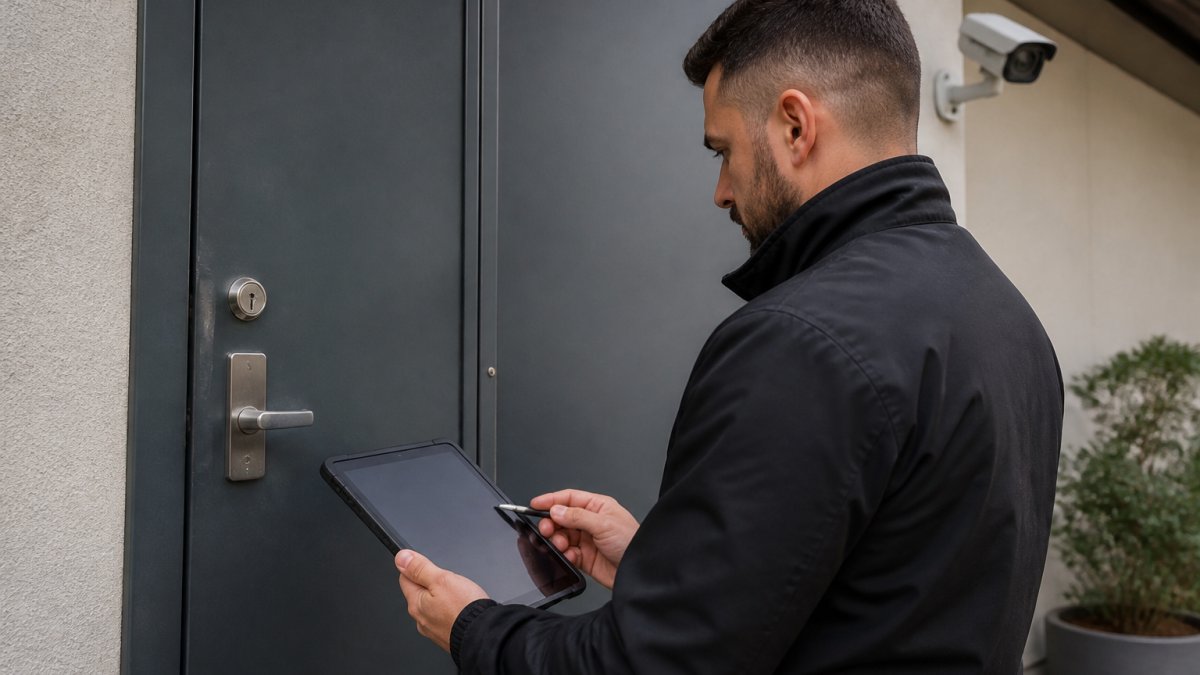
A site survey can be a physical inspection conducted with security objectives in mind, examining vulnerabilities, sight lines, entry and exit patterns, and environmental factors.
Facility-specific requirements can vary: a dispensary may need secure storage for inventory and cash, a construction site may need perimeter control against theft, and an office building may need visitor management and employee safety protocols.
Perimeter Security and Entry Point Control
Perimeter security is your first line of defense. It doesn't stop determined adversaries, but it raises the cost of entry and increases the likelihood of detection.
Entry point control means knowing who and what moves in and out, and controlling that movement per your policies, from a manned entrance with a sign-in log to credential readers and biometric verification.
The approach depends on facility type and risk profile: a high-security plant might require badge access with biometrics, a retail location might use monitored entrances and cameras, and an office building might use staffed reception plus card access.
Perimeter lighting is often overlooked but critical: well-lit entry points make surveillance more effective and deter casual intrusion, while dark areas create blind spots.
Commercial Security System Design and Integration
A commercial security system design can bring surveillance, access control, alarms, and monitoring into one coordinated system. The goal isn't maximum technology, it's the right technology working together against specific risks.
Video Surveillance and Camera Placement Strategy
Video surveillance can serve real-time monitoring, incident investigation, and deterrence. The strategy depends on what needs to be monitored and what the footage must show.
Access Control and Credential Management
Access control means managing who can go where and when. It can range from simple key management to systems with badge readers, biometric verification, and audit trails.
Intrusion Detection and Alarm Systems
False alarm rates matter. If your system generates frequent false alarms, response protocols break down: personnel stop treating alarms seriously, police response times slow, and you're paying for noise instead of protection.
Security Guard Services for Commercial Buildings
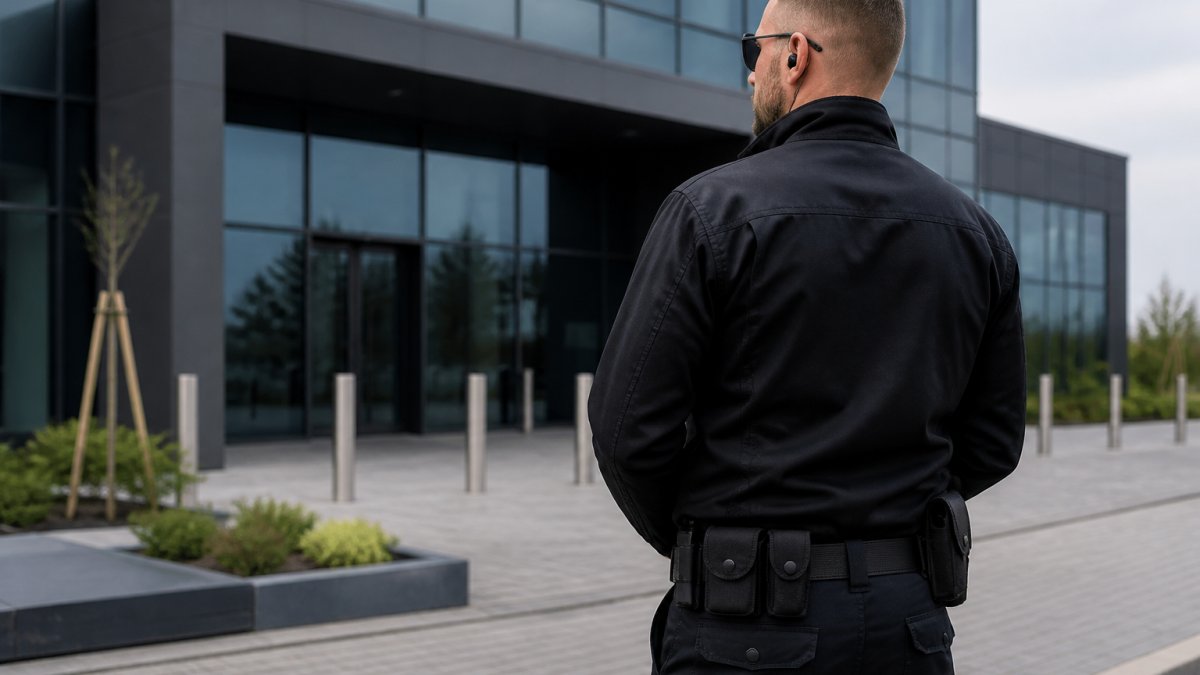
Security guard services provide human presence, situational awareness, and rapid response capability. A guard can assess a situation, respond, and communicate with other personnel.
The guard deployment model depends on your facility, risk profile, and budget. Securify Security Services provides armed, unarmed, and vehicle patrol services with 24/7 support.
Armed vs. Unarmed Security and Deployment Models
Armed security personnel carry weapons. Whether armed security is appropriate depends on the facility and its security needs.
Unarmed security personnel provide a security presence without weapons.
The distinction between armed and unarmed security matters when considering a facility's security needs.
Deployment models vary based on facility needs. Securify Security Services provides 24/7 support and vehicle patrol services.
Remote Monitoring and Incident Response Protocols
The protocols should be documented and regularly tested. When an incident actually occurs, you don't want your team figuring out what to do. You want them executing a plan they've practiced.
Budgeting, Compliance, and Measuring Security Effectiveness
A custom security plan for commercial buildings isn't just about design, it's about implementation, compliance, and ongoing effectiveness. This is where many plans fail. A well-designed plan that isn't properly implemented, maintained, or measured provides false confidence.
Phased Implementation and Lifecycle Costs
A facility may choose to implement a security plan in phases, prioritizing items over time. Learn about the cost of professional security guard services to inform your budget planning.
Compliance, Privacy, and Data Governance
Security systems generate data, surveillance footage, access logs, alarm records. That data has legal and privacy implications. You need clear policies about what data you collect, how long you retain it, who can access it, and how it's protected.
California Consumer Privacy Act requirements impose specific obligations on how you handle personal data collected through security systems. Your policies must comply with these requirements.
Compliance may include regulatory obligations specific to an industry or facility type. Consider applicable requirements for your situation.
Evaluating Plan Performance and Continuous Improvement
A security plan isn't static. It should be regularly evaluated: Is it working? Are there gaps? Have your risks changed? Have new threats emerged? Is your budget being spent effectively?
Evaluation requires metrics. Are you tracking security incidents? Response times? False alarm rates? System uptime? Personnel performance? These metrics tell you whether your plan is actually protecting what you intended to protect.
Continuous improvement means regularly reviewing your plan and making adjustments based on evaluation results, changing threat environments, and new technology. What worked last year might not work this year. What wasn't a concern two years ago might be critical now.
NFPA security assessment standards provide frameworks for evaluating security effectiveness and identifying areas for improvement.
Getting Your Custom Security Plan in Place
Implementing a custom security plan for commercial buildings involves clear ownership and defined processes.
Start by assigning a project lead within your organization, someone responsible for coordinating the planning process, managing vendors, and ensuring implementation. This person should have authority to make decisions and access to necessary resources.
Define your timeline. What's your implementation schedule? What are the key milestones? When should each phase be complete? Clear timelines keep projects on track and create accountability.
When selecting providers, consider relevant experience, licensing, and service agreements.
Consider how to evaluate security guard companies to ensure you're selecting qualified personnel who understand your specific facility needs and operational requirements.
For a quote, contact Securify Security Services.
Your security plan should be documented clearly, written down, not just discussed. Document your objectives, your risk assessment findings, your design decisions, your implementation timeline, and your ongoing evaluation processes. This documentation provides continuity if personnel change and creates accountability for execution.
A custom security plan for commercial buildings can support operational continuity and risk management. Securify Security Services provides customizable security solutions, including armed, unarmed, and vehicle patrol services, with 24/7 support. Get a Free Quote.
| Component | Purpose | Key Decision |
|---|---|---|
| Risk Assessment | Identify threats and vulnerabilities | Conduct facility-specific evaluation |
| Physical Security | Control perimeter and entry points | Match controls to threat level |
| Surveillance | Monitor activity and provide evidence | Balance coverage with usable footage |
| Access Control | Manage who goes where and when | Choose credential type and audit needs |
| Alarm Systems | Detect intrusions and unauthorized access | Define response protocols |
| Security Personnel | Provide presence and rapid response | Determine armed vs. unarmed, 24/7 vs. scheduled |
| Monitoring | Extend on-site awareness | Establish escalation and response procedures |
| Compliance | Meet regulatory and privacy obligations | Address industry-specific requirements |
Frequently Asked Questions
What should be included in a custom security plan for commercial buildings?
A custom security plan can be tailored to a building's security needs. Securify Security Services provides armed, unarmed, and vehicle patrol services, with 24/7 support.
How do you conduct a commercial security risk assessment?
A commercial security risk assessment can consider a facility's entry points, vulnerabilities, assets, and security needs. Contact Securify Security Services to discuss a custom security plan.
Should a commercial building use security guards, cameras, or both?
Whether to use guards, cameras, or both depends on a building's security needs. Securify Security Services provides armed, unarmed, and vehicle patrol services, with 24/7 support.
How often should a commercial security plan be reviewed and updated?
The appropriate review schedule depends on your facility and security needs. Contact Securify Security Services to discuss a custom security plan.
What is a physical security plan for businesses?
A physical security plan can address the protection of people, property, and operations. Securify Security Services provides armed, unarmed, and vehicle patrol services, with 24/7 support.
How much does a commercial security system design and installation cost?
Pricing depends on the services and security needs involved. Contact Securify Security Services for a quote.
What makes a security plan effective for different building types?
Security needs vary by building type. Securify Security Services provides customizable security solutions, including armed, unarmed, and vehicle patrol services, with 24/7 support.