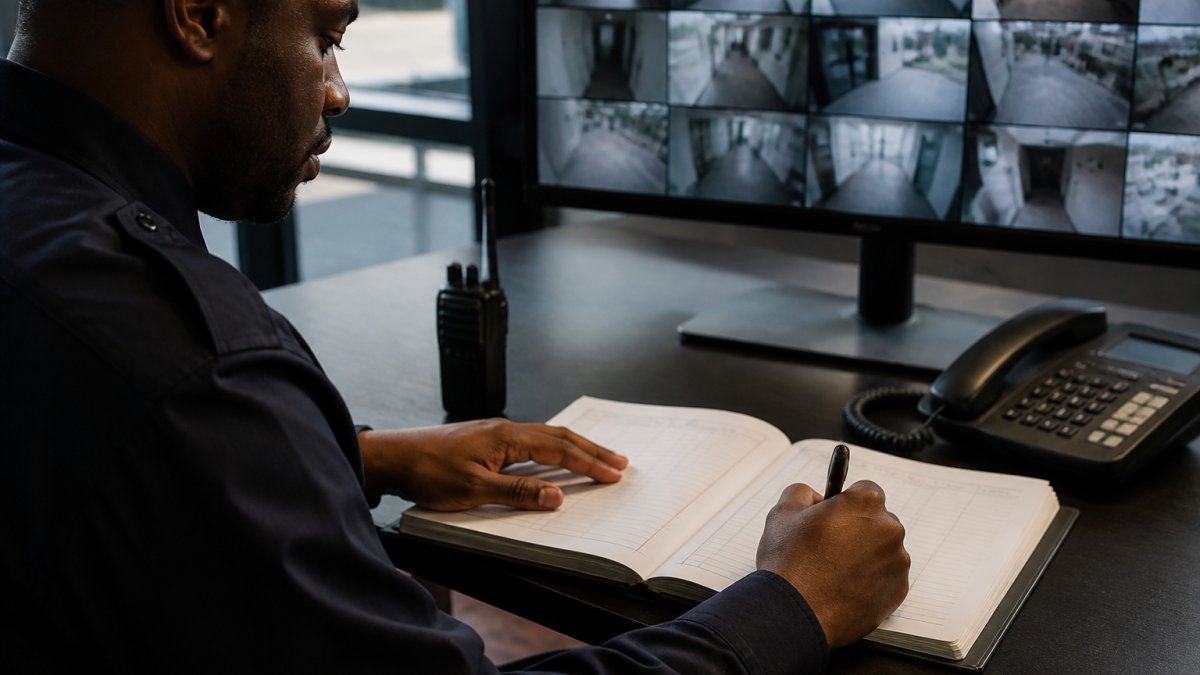
 how-to
Evaluating Security Guard Company Communication Quality
Table of Contents
- Why Communication Quality Matters in Security Services
- Establishing Security Guard Communication Protocols
- Assessing Incident Reports and Documentation Standards
- Measuring Communication Through Security Guard Performance Metrics
- Using a Security Guard Service Quality Checklist
- Key Questions to Ask During Procurement
- Maintaining Ongoing Communication Standards
- Frequently Asked Questions
Last Updated: October 14, 2026
Why Communication Quality Matters in Security Services
Strong communication is the backbone of effective security: clear incident reports, fast responses, and trust between you and your provider.
Poor communication creates blind spots: guards don't report issues, you find out days later, incidents escalate, and liability grows.
At Securify Security Services, security guard company communication separates reliable providers from mediocre ones.
This guide covers how to evaluate security guard company communication quality before signing a contract and how to monitor it afterward.
Establishing Security Guard Communication Protocols
Communication protocols are the rules that tell guards what to report, how, and when. Without them, information is inconsistent, one guard documents everything, another skips details, and you can't rely on the data.
Effective protocols specify:
- What counts as an incident (suspicious activity, safety hazard, access violation)
- How guards report incidents (radio, app, written log, email)
- Response times (immediate verbal report for emergencies, written follow-up within 2 hours)
Ask your provider to share their standard communication protocols in writing.
The best protocols also define supervisor-to-officer communication: how often supervisors check in, how they verify guards stay alert, and whether they review reports in real time or weekly.
Assessing Incident Reports and Documentation Standards
Incident reports are your primary window into what happens on your property during shifts you're not there.
Evaluate incident reports on three dimensions: clarity, completeness, and timeliness.
Clarity means you understand what happened without follow-up questions. Reports describe facts, not interpretations.
Completeness means the report includes all relevant details: exact time, physical description, what the person did, where they went, whether police were contacted, and the guard's response.
Timeliness means you get the report soon after the incident.
Request sample incident reports from any provider you're interviewing. Look for these elements in every report:
- Date and exact time of incident
- Clear description of what occurred (not vague summaries)
- Physical descriptions of people involved (height, clothing, distinctive features)
Measuring Communication Through Security Guard Performance Metrics
You can't manage what you don't measure. Security guard performance metrics show whether communication is actually happening.
Key metrics to track:
- Report submission rate: What percentage of shifts include a written activity or incident report? Target: 100% of shifts submitted within 24 hours.
- Report timeliness: Average time between incident occurrence and report submission. Target: critical incidents within 2 hours, routine incidents within 24 hours.
- Supervisor review rate: What percentage of reports are reviewed and signed off by a supervisor within 48 hours? Target: 100%.
Ask your security provider for a monthly dashboard showing these metrics. If they can't produce this data, they're not tracking performance. And if they're not tracking it, they're not managing it.
Some providers use digital reporting systems that time-stamp submissions and alert when reports are late, removing human error and creating accountability.
Using a Security Guard Service Quality Checklist
Use this checklist before signing a contract and again during annual reviews to evaluate whether a provider's communication meets your needs.
| Evaluation Area | Standard | Your Assessment |
|---|---|---|
| Written communication protocols | Provider has documented, specific protocols for incident reporting, escalation, and supervisor oversight | ☐ Yes ☐ No ☐ Partial |
| Incident report quality | Sample reports are clear, complete, timely, and include all required details | ☐ Yes ☐ No ☐ Partial |
| Supervisor oversight | Supervisors review and sign off on reports; surprise site visits documented | ☐ Yes ☐ No ☐ Partial |
| Response time to client inquiries | Provider responds to questions about incidents within 24 hours (1 hour for urgent) | ☐ Yes ☐ No ☐ Partial |
| Digital reporting system | Reports submitted via app or secure system with automatic time-stamping | ☐ Yes ☐ No ☐ Partial |
| Performance metrics | Provider tracks and reports monthly metrics on submission rate, timeliness, completeness | ☐ Yes ☐ No ☐ Partial |
| Guard training documentation | Guards receive documented training on communication protocols and incident reporting | ☐ Yes ☐ No ☐ Partial |
| Professional communication | All written and verbal communication is clear, accurate, and free of errors | ☐ Yes ☐ No ☐ Partial |
| Customization capability | Provider willing to adjust communication protocols to match your specific facility needs | ☐ Yes ☐ No ☐ Partial |
| Escalation procedures | Clear procedures for when guards contact you directly vs. waiting for supervisor review | ☐ Yes ☐ No ☐ Partial |
Aim for "Yes" on at least 8 of 10 items. "Partial" scores should trigger follow-up conversations about how the provider will improve.
Key Questions to Ask During Procurement
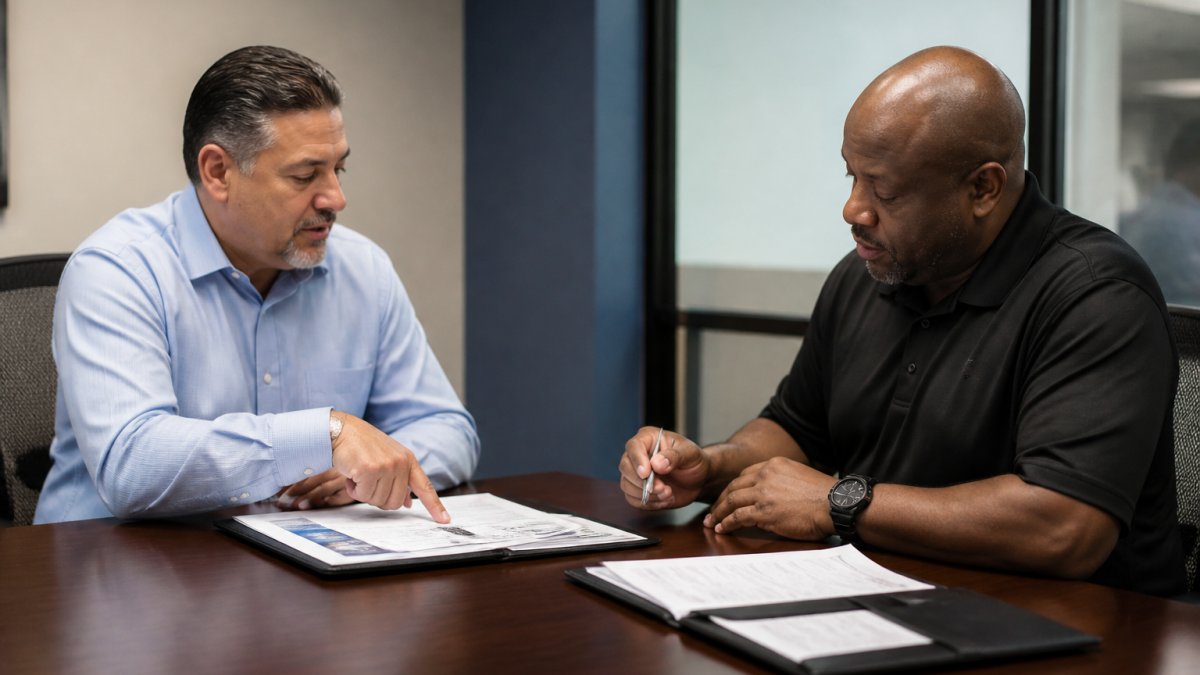
Most buyers ask about communication during sales and get polished answers, but answers are cheap. To verify a provider's communication quality, move past the Q&A into evidence, scenario testing, and reference checks.
Use a three-part procurement method: ask for artifacts, run a scenario test, and check references against the same criteria.
Part 1: Ask for artifacts, not assurances
Pair every question below with a document request. If the provider can't produce the artifact, treat the verbal answer as unverified.
On incident reporting:
- "Show me three redacted incident reports from the last 90 days, one routine, one property crime, one medical or safety event." Look for exact times, physical descriptions, actions taken, and supervisor sign-off. Redactions are fine; missing fields are not.
- "What is your median time from incident to written report?" Ask them to show the timestamp data, not estimate it.
- "What happens when a report is incomplete?" The answer should describe a specific workflow: returned to the officer, corrected within a set window, logged as a coaching event.
On communication protocols:
- "Provide your written post orders and escalation matrix for a site like ours." Post orders are the site-specific instructions that tell an officer what to report and to whom.
- "Which events trigger an immediate call to me versus a written report only?" Get this in writing and attach it to the contract as an exhibit.
- "Do officers contact me directly, or does everything route through dispatch?" Both models exist; the right answer depends on your risk tolerance and after-hours coverage.
On responsiveness and after-hours access:
- "What is your contractual response time for a client inquiry during business hours, after hours, and on holidays?" Push for a number, not "promptly."
- "Who answers the phone at 2 a.m., and what is their authority to act?"
- "How do I get incident information at 3 a.m., phone call, text, email, portal?"
On technology and records:
- "Is reporting digital or paper? If digital, can I log in to a client portal and pull reports myself?"
- "What is your data retention period, and can I export my site's records if we part ways?" Ask for the export format.
- "What is your system uptime over the last 12 months, and what is the fallback when the app is down?"
On accountability:
- "What communication KPIs do you report, and can I see a sample monthly dashboard?"
- "How many officers were disciplined or retrained for reporting failures in the last year?" A provider with zero incidents is either perfect or not tracking.
- "What remedies do I have if response times or report quality slip?" Get the service-level credit or cure period in writing.
Part 2: Run a scenario test
Before signing, give the provider two or three written scenarios and ask for the exact communication sequence they would follow. This exposes whether their protocols are real or aspirational.
Sample scenarios:
- After-hours intrusion attempt. An officer observes someone trying a locked door at 2:15 a.m. Who is notified, in what order, within what time, and what is documented?
- Medical emergency. A tenant collapses in the lobby. What does the officer do first, who calls 911, and how and when is the client notified?
- Client complaint about a guard. You email at 9 p.m. that an officer was on their phone. Who responds, when, and what is the corrective action timeline?
Score each response on specificity.
Part 3: Reference-check against the same criteria
Ask for three client references of similar property type and size, then ask each the same five questions so you can compare answers:
- How often do you receive incident reports, and are they complete on first submission?
- When you raise a communication problem, how long until it is resolved?
- Has the provider ever missed a critical notification? What happened next?
- Can you access reports without asking the provider for them?
- Would you renew, and what is the single biggest communication weakness you have seen?
Score the answers before you decide
Assign each provider a 0-2 score per category, protocols, reporting artifacts, responsiveness commitments, technology access, and reference feedback, where 0 is no evidence, 1 is partial, and 2 is documented.
ASIS International guidance on security officer post orders and reporting
Maintaining Ongoing Communication Standards
Communication quality can decay quietly. Reports can get shorter, timestamps can slip, supervisor sign-offs can disappear, and nobody notices until an incident exposes the gap. A review rhythm with defined thresholds and consequences can help prevent this.
Set a review cadence matched to your risk
Match the cadence to the consequences of a communication failure.
| Site type | Review cadence | Report audit sample |
|---|---|---|
| Low-risk commercial, single shift | Quarterly | 10% of reports |
| Multi-tenant office, retail, or campus | Monthly | 20% of reports |
| Healthcare, data center, critical infrastructure | Weekly | 50% of reports, plus every critical incident |
| Any site after a serious incident | Weekly until metrics recover | 100% of reports for 90 days |
A monthly review should take 30-45 minutes and cover the prior month's KPI dashboard, a sample of reports, and open issues. A quarterly review adds trend analysis and a protocol refresh.
Audit reports, don't just count them
Counting reports tells you volume. Auditing them tells you quality. Pull a sample each period and score each report against five fields:
- Exact time of incident and time of report submission
- Factual description without speculation
- Physical descriptions and identifiers
- Actions taken by the officer, including what was not done and why
- Supervisor review and sign-off
A report missing two or more fields is a failed report. Track the failure rate over time. A rising failure rate is an early warning that training or supervision is slipping.
Track KPIs with action thresholds
Define each metric, a target, and a threshold that triggers a written corrective action. Without a threshold, a metric is just a number.
- Acknowledgment time: Time from client inquiry to human response. Target: under 1 hour during business hours, under 4 hours after hours. Trigger: two misses in a month.
- Critical incident notification: Time from incident to client notification for defined critical events. Target: under 30 minutes. Trigger: any single miss.
- Report submission timeliness: Percentage of reports submitted within the agreed window. Target: 95% or higher. Trigger: below 90% for two consecutive months.
Ask for the dashboard in a format you can keep, CSV or PDF, so you can compare months yourself rather than relying on the provider's summary.
Build a corrective action ladder
When a threshold is breached, the response should escalate in defined steps rather than restarting the conversation each time.
- Verbal coaching (first miss): Supervisor addresses the officer, documents the coaching in the personnel file.
- Written corrective action (second miss or any critical miss): Provider issues a written notice, retrains the officer on the relevant protocol, and reports back to you within 5 business days.
- Site-level review (pattern across officers): Provider conducts a post-order review, retrains the whole shift, and presents a revised protocol for your approval.
- Contractual remedy (repeated failure): Apply the service-level credit or cure period defined in your agreement. If your contract has no remedy language, that is the gap to fix at renewal.
Refresh protocols at least annually
Your property changes, tenants move, construction starts, a new risk emerges. Schedule an annual protocol refresh where you and the provider review post orders, escalation triggers, contact lists, and after-hours procedures. Update the written exhibits attached to the contract so the standards you measure against stay current.
Communication standards are not a one-time setup. They are a maintenance schedule.
Frequently Asked Questions
How often should a security company communicate with me about what's happening on my property?
Communication frequency depends on your facility's risk profile and contract terms. High-risk sites typically require daily incident summaries and weekly management reviews. Standard facilities benefit from incident-based reporting plus monthly performance summaries. Establish baseline expectations during procurement, specify whether you want daily briefings, weekly reports, or incident-triggered alerts. Responsiveness to urgent situations should be immediate, regardless of facility type.
What should a good security guard incident report template include?
Effective incident reports must capture date, time, location, personnel involved, detailed description of events, actions taken, witnesses, and follow-up required. Reports should be clear enough for someone unfamiliar with your site to understand what happened. Include fields for officer observations, environmental conditions, and any safety hazards detected. The template should allow officers to document both security incidents and operational concerns like equipment malfunctions or access control issues.
What security guard performance metrics should I track to evaluate communication quality?
Track report timeliness (how quickly incidents are documented), report completeness (all required fields filled accurately), response time to client inquiries, and supervisor-to-officer feedback frequency. Monitor incident report accuracy by comparing officer accounts with video or witness statements. Measure client satisfaction through quarterly reviews. Track communication technology adoption, are officers using your designated reporting systems consistently? Include metrics on supervisor coaching sessions and training completion rates.
What are the signs of poor communication from a security company?
Red flags include delayed or missing incident reports, vague incident descriptions that lack detail, unresponsiveness to your calls or emails, inconsistent information from different officers or supervisors, and lack of proactive notification about issues on your property. Poor communication also appears as one-way reporting (company sends information but doesn't ask for feedback), no clear escalation procedures for urgent matters, and inability to explain their communication protocols or standards when asked.