 listicle
Benefits of Armed Security for Dispensaries
Table of Contents
- Why Dispensaries Face Unique Security Risks
- The Core Benefits of Armed Security for Dispensaries
- Armed Security Guard Responsibilities at a Dispensary
- Armed vs Unarmed Security Guards: Which Is Right for Your Dispensary?
- Building a Dispensary Security Plan That Works
- How Security Impacts the Dispensary Customer Experience
- Measuring Effectiveness and Avoiding Common Pitfalls
- Frequently Asked Questions
Last Updated: October 19, 2026
Why Dispensaries Face Unique Security Risks
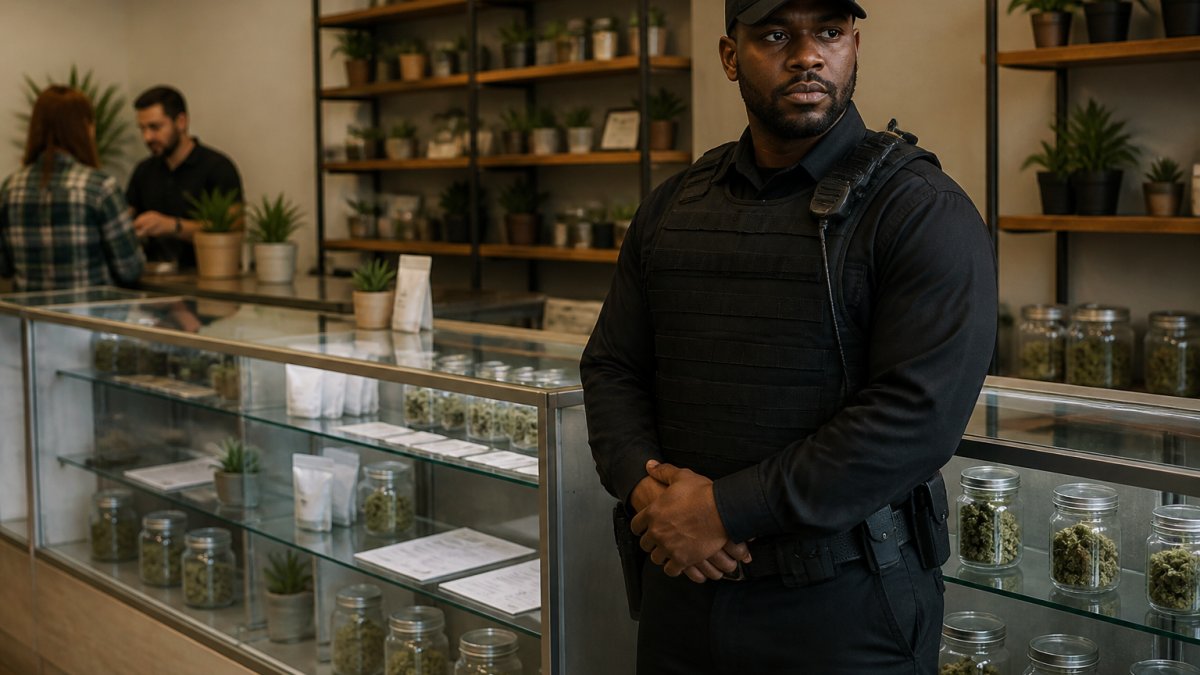
A cannabis dispensary holds two things that attract criminals: high-value inventory and large amounts of cash.
That combination explains why dispensary security is not a generic guard contract. Robbery, burglary, and vandalism prevention all matter, but so does compliance with state licensing rules that can shut a shop down after a single serious incident.
This guide breaks down the real benefits of armed security for dispensaries, where it fits, where it does not, and how to decide.
The Core Benefits of Armed Security for Dispensaries
Armed security delivers two measurable outcomes: deterrence and protection. A visible security presence changes how a would-be offender evaluates the risk of hitting your store, and most criminals choose the easier target.
Deterrence and Crime Prevention
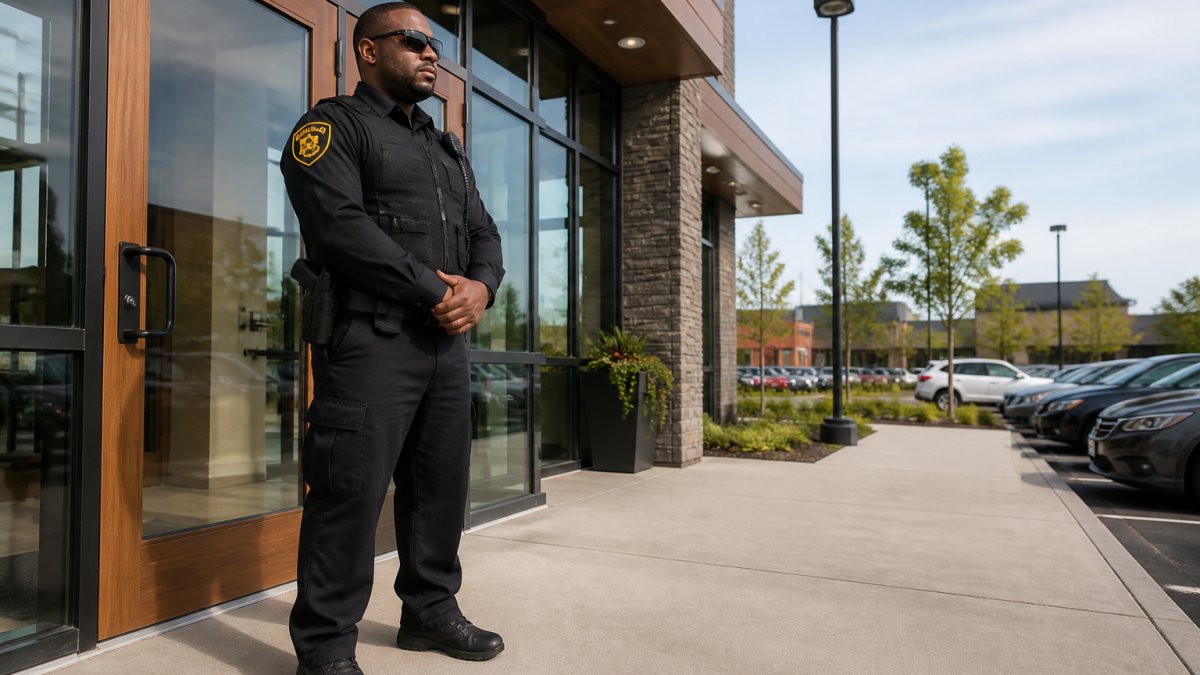
Deterrence works because criminals plan. A shop with one camera and a clerk behind glass looks like an opportunity. A shop with a trained officer at the door, clear sightlines, and controlled entry looks like a problem. That shift in perception is the cheapest form of incident prevention available.
Protecting Staff and Customers
Employee safety and customer safety are the same problem. A robbery at the register puts everyone in the room at risk. Armed officers provide a credible response capability and a calm presence that reduces panic during a threat.
Armed Security Guard Responsibilities at a Dispensary
Armed security guard responsibilities go well beyond standing at a door. At a dispensary, an armed officer typically handles:
- Controlling entry and verifying IDs at the door
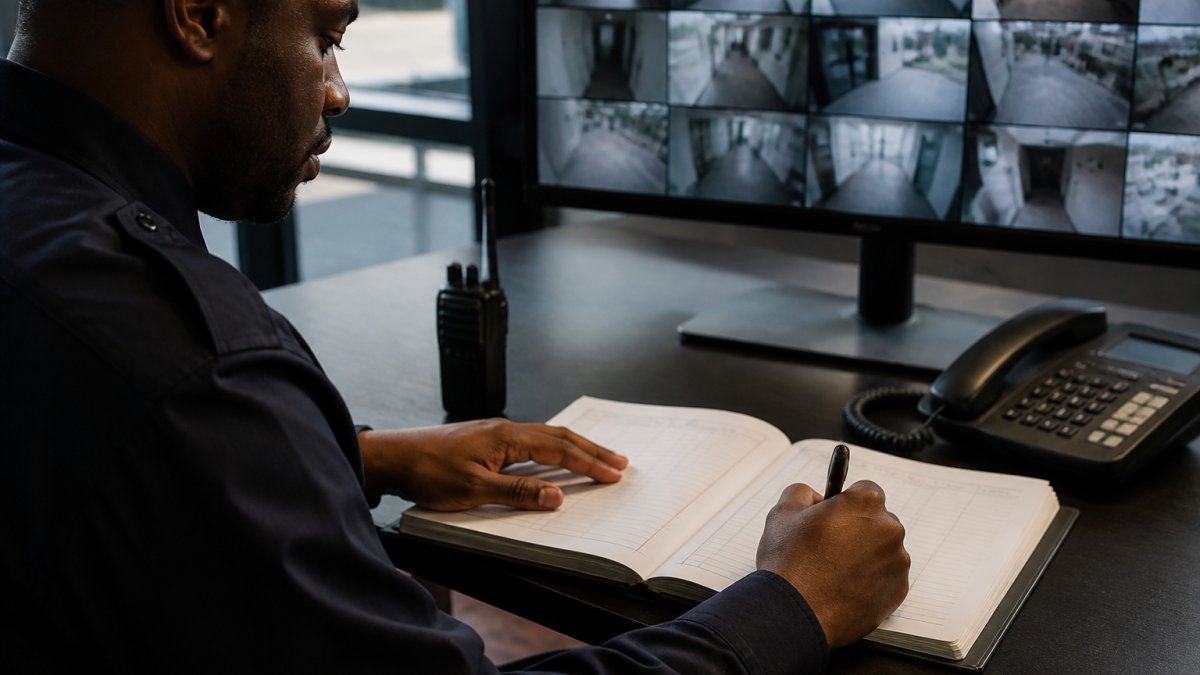
- Monitoring surveillance cameras and the sales floor
- Managing cash handling procedures and safe transfers
The role is part loss prevention, part customer service, and part emergency response. A guard who only watches a screen is not doing the job.
Armed vs Unarmed Security Guards: Which Is Right for Your Dispensary?
The armed vs unarmed decision is not a philosophy question. It is a risk-transfer question: which configuration moves the most likely loss off your balance sheet at a cost and liability level your license and insurer can tolerate? Most operators who get this wrong choose on price or gut feel, then discover the mismatch after an incident.
Use the framework below to work through the decision in order. Each step narrows the choice.
Step 1: Confirm what your state actually permits
Before comparing anything else, confirm three things with your state cannabis regulator and private security licensing authority:
- Whether armed guards are permitted at licensed cannabis premises at all, and under what endorsement or permit
- What training, firearms qualification, and continuing-education hours the guard must hold
- Whether the licensee must notify the regulator, file a security plan amendment, or carry additional insurance when armed staff are on site
Some states require armed coverage at certain license tiers; others leave it to the licensee but impose strict permit and insurance conditions; a few effectively discourage it. The National Conference of State Legislatures cannabis policy database is a starting point for state-level differences, but the binding answer comes from your regulator and your security licensing body. If armed coverage is not clearly permitted, the decision is made for you.
Step 2: Score your site on five risk factors
Armed coverage earns its cost when several of these stack up; unarmed coverage is usually the better fit when most are low.
| Risk factor | Low (favors unarmed) | High (favors armed) |
|---|---|---|
| Cash volume | Low daily cash, frequent armored pickup | High daily cash, limited banking access |
| Inventory value on site | Small display inventory, frequent restock | Large on-site vault or backstock |
| Foot traffic and layout | Controlled single entry, small sales floor | Multiple entries, large floor, busy lot |
| Location and crime context | Low-incident retail area | Elevated property or violent-crime reports nearby |
| Operating hours | Daytime only | Late nights, early opens, cash transfers after dark |
A shop that scores high on three or more factors is usually a candidate for armed coverage at the door and during cash movement. A shop that scores low across the board is usually paying for liability it does not need.
Step 3: Weigh the liability and insurance mechanics
This is where most comparisons stop short. Armed coverage changes your risk profile in ways that show up in contracts and coverage, not just the guard's presence:
- Use-of-force exposure. An armed officer introduces the possibility of a discharge on your premises. Your general liability and any specialized security coverage may respond differently depending on the officer's employment status (direct hire vs. contract), training records, and written post orders.
- Insurer requirements. Many carriers ask for proof of guard licensing, firearms qualification, use-of-force policy, and incident-reporting procedures before quoting or renewing coverage for a dispensary with armed staff. Missing documentation can raise premiums or void a claim.
- Contractor vs. employee. Contracted security typically shifts employment liability to the provider, but only if the contract clearly assigns indemnification, training responsibility, and supervision. Read that language before you sign.
Step 4: Factor in customer experience and brand
Armed presence reads differently to different customer segments. Some shoppers interpret a uniformed officer as professionalism and safety; others read it as hostility, especially first-time customers and medical patients. The answer is rarely all-or-nothing:
- Armed at the perimeter, unarmed on the floor. Many operators place armed coverage at entry, the lot, and cash-transfer points, and keep the sales floor staffed by unarmed, de-escalation-trained officers.
- Armed during high-risk windows only. Cash transfers, closing, and weekend nights are common armed windows; daytime retail may not need it.
- Consistent scripting. Whoever is at the door should greet, explain the ID check, and keep the line moving. Training and tone matter more than the firearm for customer comfort.
Step 5: Compare total cost, not hourly rate
The armed guard's hourly rate is only one line. Build the comparison on total cost of coverage:
- Hourly guard rate (armed vs. unarmed)
- Licensing, permit, and training costs borne by you or the provider
- Insurance premium difference
A provider that quotes a low armed rate but cannot document training, insurance, and reporting is not cheaper. It is transferring risk back to you.
A short decision rule
If your state permits armed coverage, your site scores high on cash, inventory, or location risk, and your insurer and regulator accept the documentation, armed coverage at entry and cash-movement points is usually the right call. If any of those three is missing, start unarmed with strong de-escalation training, tight access control, and integrated technology, and revisit the decision as your risk profile changes.
Building a Dispensary Security Plan That Works
A dispensary security plan is a written document that maps risks to controls, assigns responsibility, and sets response procedures. It should cover the full property, not just the sales floor.
Start with a risk assessment. Walk the site and document entry points, cash paths, inventory storage, parking, and blind spots. Then layer controls:
- Perimeter: fencing, lighting, and clear signage
- Entry: man-trap doors and ID verification
- Interior: surveillance cameras covering every register and doorway
- Duress: panic buttons at each station
- Access: keycard or biometric control for inventory rooms
- Response: posted emergency procedures and law enforcement contacts
Guard deployment should follow the risk map. Put your most experienced officer where cash and product move, and keep a roving officer on the lot after dark.
How Security Impacts the Dispensary Customer Experience
Security shapes how customers feel the moment they walk up. A well-run program feels safe and professional. A poorly run one feels hostile, and that costs you sales.
Customer experience improves when officers greet people, explain the ID check politely, and keep lines moving. De-escalation skills, clear communication, and a calm demeanor turn a security presence into part of the brand.
There is a stigma problem too. Some customers associate armed guards with danger rather than safety.
Measuring Effectiveness and Avoiding Common Pitfalls
A security program you cannot measure is a cost center you cannot defend at renewal, to your insurer, or to your regulator. Treat armed coverage as one control inside an integrated program, then measure whether the program is working.
Integrate the guard with the rest of the system
Armed officers deliver the most value when wired into the site's other controls rather than posted as a standalone presence:
- Cameras and surveillance. The officer should have live access to camera feeds and a clear protocol for reviewing and preserving footage after an incident. Camera coverage should include every register, doorway, cash path, and the lot.
- Alarms and duress. Panic buttons at each station and a monitored alarm should route to the officer and to the monitoring center, with a written response sequence.
- Access control. Man-trap entry, keycard or biometric control on inventory rooms, and visitor logs give the officer something to enforce. Access control without enforcement is decoration.
Track a small set of KPIs monthly
Pick metrics you can actually collect, define them the same way every month, and review them with your provider on a fixed cadence:
| KPI | What it measures | How to collect it |
|---|---|---|
| Incident frequency | Theft, robbery attempts, vandalism, disturbances | Incident reports, cross-checked with camera review |
| Response time | Time from alert or observation to officer action | Dispatch logs and alarm records |
| Inventory shrinkage | Product loss not explained by sales or waste | Cycle counts and POS reconciliation |
| Cash variance | Unexplained differences in cash handling | Daily reconciliation and safe-transfer logs |
| Safety reports | Staff and customer injuries or near-misses | Incident and near-miss forms |
| Customer feedback | Comfort and professionalism at entry | Short post-visit survey or review themes |
| Training currency | Percentage of officers current on required training | Provider training records |
Set a baseline in month one, then compare month over month. A single month tells you little; a trend tells you whether the program is holding.
Pitfalls that quietly erode the program
- Hiring on price alone. The lowest hourly rate often means thinner training, weaker supervision, and gaps in insurance documentation.
- Skipping background checks or letting them lapse. Recurring screening matters as much as the initial check.
- Ignoring the graveyard shift. Risk concentrates in low-staff, low-light windows; coverage should follow the risk map, not the convenience of the schedule.
Securify Security Services builds customizable security plans around each site, runs rigorous background checks and intensive training for every officer, and evaluates performance continuously so quality does not drift after month one. We handle armed, unarmed, and vehicle patrol directly, and we are licensed, insured, and fully compliant with California State regulations (PPO#122535).
Frequently Asked Questions
What can armed security guards do at a dispensary?
Armed security guards at a dispensary provide a visible deterrent against robbery and theft, monitor entrances and high-value inventory areas, control access, and respond quickly to threats. They are trained to de-escalate conflicts and coordinate with law enforcement. Their presence protects staff and customers while supporting compliance with state regulations. Unlike unarmed guards, they can respond to armed threats with proportional force when necessary, though their primary role remains prevention and safety.
Is armed security better than unarmed security for a dispensary?
It depends on your risk profile. Armed guards are often better for dispensaries handling large amounts of cash and high-value inventory, especially in areas with higher crime rates. They offer stronger deterrence and faster response to armed threats. Unarmed guards may suit lower-risk locations or customer-facing roles where a softer presence is preferred. Many dispensaries use a mix: armed guards for perimeter and cash handling, unarmed staff for interior customer service.
What should dispensary owners look for when hiring armed security?
Look for licensed and insured providers with specific experience in cannabis security. Verify training in de-escalation, use-of-force policies, and emergency response. Ask about background checks, ongoing performance evaluations, and reporting procedures. Confirm they carry liability coverage and can customize a dispensary security plan for your layout and risk level. A provider that subcontracts armed guards may offer less consistency, so ask whether officers are direct employees.
How can a dispensary decide whether it needs armed security?
Start with a risk assessment covering crime rates in your area, cash volume, inventory value, and past incidents. Review state and local regulations for armed guard requirements. Consider customer perception and whether an armed presence aligns with your brand. If your dispensary handles significant cash, operates in a high-risk area, or has experienced threats, armed security is likely worth the investment. A security consultant can help you weigh costs against potential losses.